Guide · Label reading
How to compare blood sugar supplements: 8 label checks
To compare blood sugar supplements, run eight checks on each label: serving size, printed amounts, studied dose, extract ratio, stimulants, other ingredients, proof and cost per day. Do the arithmetic yourself. On Payarmin, an even split of the 200 mg blend is 9.09 mg per line, while studies often used 200 mg or more.
Written by the Payarmin meter deskUpdated
The ruler01
What should you compare on blood sugar supplements?
Compare eight things that sit on the bottle or the order page: servings, amounts, studied dose, extract strength, stimulants, extras, proof and daily cost.
The ADA finds no supplement proven to lower glucose (ADA, Vitamins & Supplements). That makes the comparison about honesty and fit, not about picking a winner.
Serving math
How many servings, and how many days.
Amounts shown
Named doses, or one blend total.
Studied dose
Label amount against trial amount.
Extract strength
A ratio or a standardized percent.
Stimulants
Caffeine sources and amounts.
Other ingredients
Sweeteners, preservatives, pets.
Proof
Product trial or lab report.
Cost per day
Price over days, plus terms.
Checks 1 and 202
How do you read servings and amounts on a supplement label?
Start with the serving size and the servings per container, then ask whether each ingredient shows its own amount.
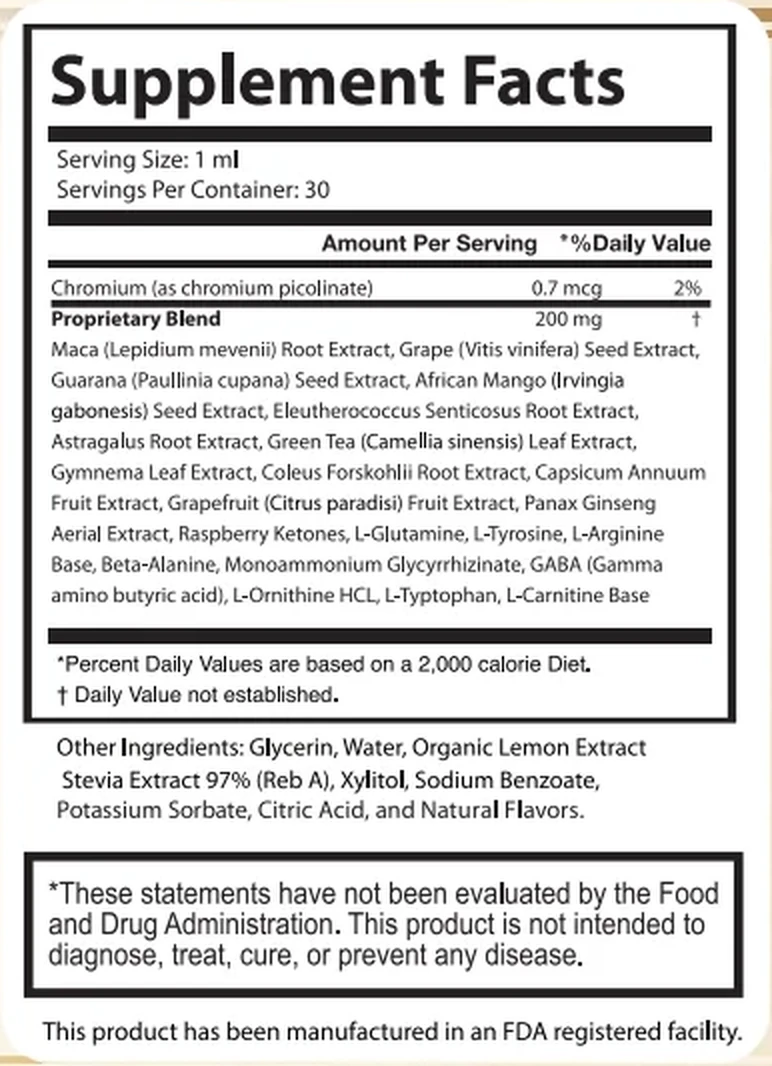
Payarmin lists a serving of 1 mL and 30 servings. If one dropper is 1 mL, one bottle gives about 30 days at 1 dropper and about 15 days at 2. The label does not print the dropper volume, so that is an assumption.
Amounts come second. Chromium prints as 0.7 mcg. The other 22 lines share a 200 mg total, a format the rules allow (21 CFR 101.36 (eCFR)). Divide it yourself: 200 / 22 = 9.09 mg on an even split.
A blend lists lines from most to least by weight, so line k weighs at most 200 / k mg. Maca could be up to 200 mg. The 8th line, gymnema, could be up to 25 mg. Either could also be far less.
Check 303
Does the label dose match the amount studied?
A label dose matches the research only when it falls inside the range the trials used, and Payarmin's printed and ceiling amounts fall below it.
Chromium trials ran from 1.28 to 1,000 mcg a day, with the key glucose results at 200 to 1,000 mcg (NIH ODS, Chromium). Payarmin has 0.7 mcg: 0.35% of 200. Gymnema studies used 200 to 400 mg of extract (Drugs.com, Gymnema monograph), against a ceiling of 25 mg here.
Below the studied range does not prove anything either way. It means the research cannot be borrowed for this bottle.
Checks 4 and 504
What do extract strength and stimulants tell you?
Extract strength tells you how concentrated a plant line is, and stimulant sources tell you what else is in the drops besides the plant you wanted.
A line such as "gymnema leaf extract" can mean very different things. Studies cite extract standardized to 25% gymnemic acids (Drugs.com, Gymnema monograph). Payarmin prints no extract ratios or percentages, so its plant lines cannot be matched to a trial extract.
Stimulants are check 5. Guarana is a caffeine source (MSKCC, Guarana) and green tea contains caffeine (NCCIH, Green Tea). FDA cites 400 mg a day as an amount not generally linked to harm in most healthy adults (FDA, Caffeine: how much is too much?). The Payarmin label prints no caffeine amount, so you cannot add it to your coffee total.
| Check | What to look for | On the Payarmin label |
|---|---|---|
| Extract strength | A ratio or standardized percent | Not published |
| Caffeine sources | Guarana, green tea, coffee | Guarana (3rd) and green tea (7th); no amount |
| Caffeine amount | Milligrams per serving | Not published |
Check 605
Which other ingredients should you look at?
The "other ingredients" line shows sweeteners, preservatives and anything that matters for pets or diet, so read it as closely as the active list.
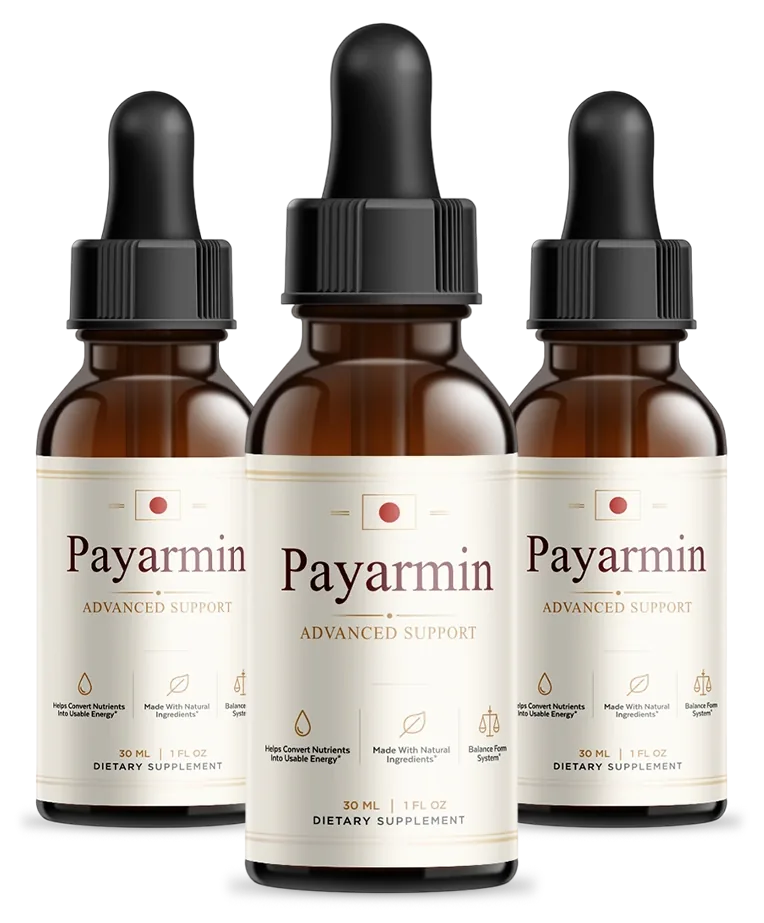
Payarmin's other ingredients are glycerin, water, organic lemon extract, stevia extract 97% (Reb A), xylitol, sodium benzoate, potassium sorbate, citric acid and natural flavors. Two points follow.
- Xylitol can drop a dog's blood sugar within 10 to 60 minutes (FDA, Paws Off Xylitol). Keep any xylitol product away from pets.
- The sales page says "100% natural", yet the label lists preservatives and natural flavors. Compare the words with the list.
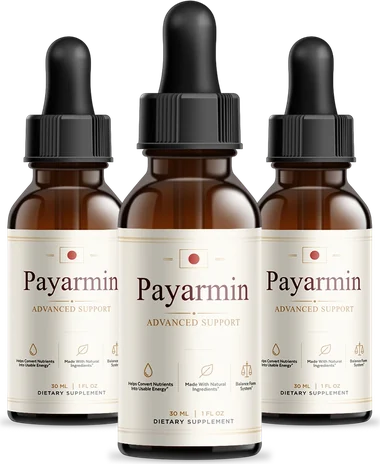
Payarmin: from $49 a bottle30 mL · 2, 3 or 6 bottles · free US shipping on 3 and 6 · 60-day results-or-refund guarantee
See packsCheck 706
What counts as proof for a blood sugar supplement?
Proof means a trial of that product, or an independent lab report for the lot you hold, and a seal or lot number alone is neither.
Payarmin shows lot P-26/PA-3276 and CoA P-3276-26-PA, which are seller references, not published lab results. Its "FDA registered facility" line is real label text, but registration is not approval (FDA, Registration of Food Facilities guide), and The FDA does not approve supplements (FDA, Using Dietary Supplements). No trial of the product is named.
Ask the same of every brand. If a page says "clinically proven", look for the study title, the sample size and the dose. The FTC expects health claims to have solid support (FTC, Health Products Compliance Guidance).
FDA has warned about supplements sold for diabetes that contain hidden drugs or make treatment claims (FDA, Illegally Sold Diabetes Treatments) (Tucker et al., JAMA Netw Open 2018). Read claims before price.
Check 807
How do you compare cost per day and refund terms?
Cost per day is the pack price divided by the days it lasts, and it is the only fair way to compare a drop bottle with a capsule jar.
On the sales page, Payarmin starts at $79 a bottle in the 2-bottle pack. That is 60 days at 1 dropper, or $2.63 a day, and $5.27 at 2 droppers. The 6-bottle pack at $49 a bottle works out to $1.63 and $3.27 (Payarmin sales page).
Then read the refund. Payarmin's 60 days run from the date of purchase, full or empty bottles count, and the buyer pays return shipping.
Worked example08
How does Payarmin score on all eight checks?
Payarmin shows a full ingredient list and clear terms, but it leaves amounts, extract strength and proof for you to ask about.
| Check | Reading |
|---|---|
| 1 Serving math | 1 mL, 30 servings, about 30 days at 1 dropper (assumed) |
| 2 Amounts | Chromium 0.7 mcg printed; 22 lines share 200 mg |
| 3 Studied dose | Printed and ceiling amounts sit below trial ranges |
| 4 Extract strength | Not published |
| 5 Stimulants | Guarana and green tea; no caffeine amount |
| 6 Other ingredients | Xylitol, two preservatives, stevia |
| 7 Proof | No product trial; lot and CoA are seller references |
| 8 Cost and terms | $1.63 to $2.63 a day at 1 dropper; 60 days from purchase |
Label caution applies to every bottle: if you use insulin or a sulfonylurea, ask your pharmacist first. See the full label transcript and the claim review.
FAQ09
Comparing blood sugar supplements: common questions
What is the best way to compare two blood sugar supplements?
Put both labels side by side and write the same eight numbers for each: servings, amounts, studied dose, extract strength, caffeine, extras, proof and cost per day. The comparison then rests on arithmetic rather than slogans, and the weaker label is easy to spot.
Is a proprietary blend a bad sign on a supplement?
A blend is legal (21 CFR 101.36 (eCFR)) but hides each line's amount, so it is a gap, not proof of a problem. Use the ceiling trick: line k can weigh at most the blend total divided by k. Then ask the brand for the amounts.
How do I know if a supplement dose is high enough to matter?
Compare the label amount with the trial amount and divide. Chromium trials used 200 to 1,000 mcg (NIH ODS, Chromium); Payarmin prints 0.7 mcg. Even a full dose would not prove benefit, since ADA finds none proven (ADA, Vitamins & Supplements).
Does a made-in-USA claim tell me a supplement is good?
No. It tells you where it was made, not how well it works. The rule behind that claim is about origin (FTC, Complying with the Made in USA Standard), and a registered facility is not an approved product (FDA, Registration of Food Facilities guide). Look for lab reports and product trials instead.
What price per day is reasonable for a blood sugar supplement?
No price is reasonable if the product cannot show what it contains in a useful amount. Still, compute it: Payarmin's pack prices work out from $1.63 to $2.63 a day at 1 dropper. Add shipping where charged and the cost of return postage.
Should I compare supplements before talking to my doctor?
Compare them to bring better questions, not to replace the visit. FDA advises talking to a doctor or pharmacist before using any supplement (FDA, Using Dietary Supplements). Take printed labels, your medicine list and your recent glucose numbers.
Who wrote this10
Written and reviewed by
Pages built from the label, the sales page and linked NIH, FDA, CDC, FTC and peer-reviewed sources.
Last updated . Read our editorial standards, and the way we check reviews. This website is a U.S. retail partner for Payarmin, not the manufacturer or the label's distributor. Buying through our order links earns us money.
Keep reading
More about Payarmin
U.S. retail partner for Payarmin
Ready to try Payarmin?
Start by checking your medicines, then pick a pack. Six bottles cost the least per bottle, and three or six ship free in the US. The 60-day guarantee counts from the day you buy.
- Secure checkout
- 60-day money-back guarantee
- Ships from the U.S.