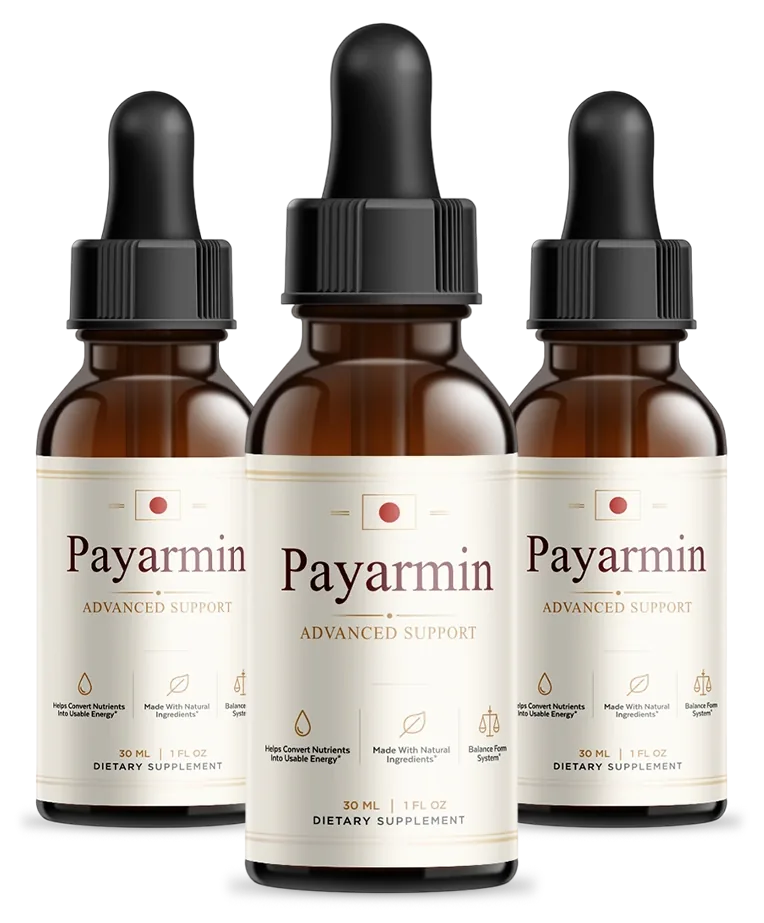
Ingredients · 23 label lines
Payarmin ingredients: all 23 label lines, with the math
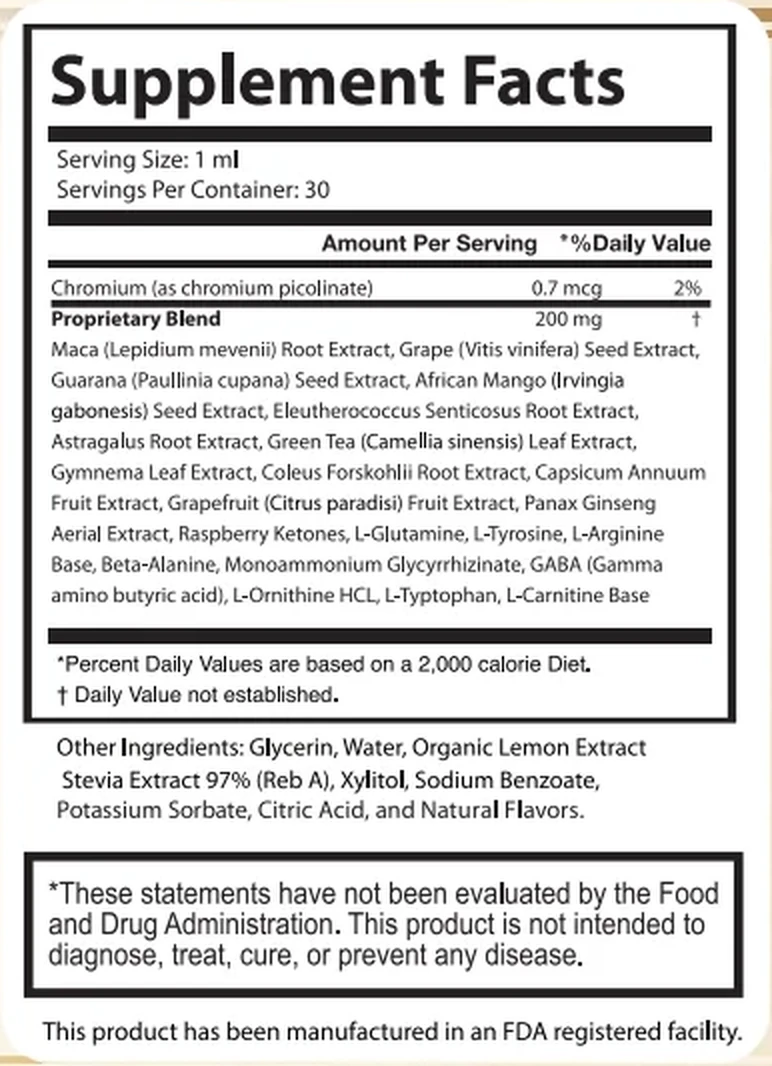
Payarmin's ingredients are chromium (as chromium picolinate) at 0.7 mcg plus a proprietary blend of 22 lines weighing 200 mg per mL. Maca is listed first and L-carnitine last. Single blend amounts are not printed, so the label order gives only a ceiling for each line.
Written by the Payarmin meter deskUpdated
The list01
What are the ingredients in Payarmin?
Payarmin lists 23 active lines: chromium picolinate, then a 200 mg blend of 22 ingredients.
The blend runs from most to least by weight: maca, grape seed, guarana, African mango, eleuthero, astragalus, green tea, gymnema, coleus forskohlii, capsicum, grapefruit fruit extract, Panax ginseng aerial extract, raspberry ketones, L-glutamine, L-tyrosine, L-arginine, beta-alanine, monoammonium glycyrrhizinate, GABA, L-ornithine HCL, L-tryptophan and L-carnitine.
The label prints no extract ratios. It does not say how strong any extract is, only that the extract is in there. The sales page names six ingredients, and the label shows 23. We follow the label.
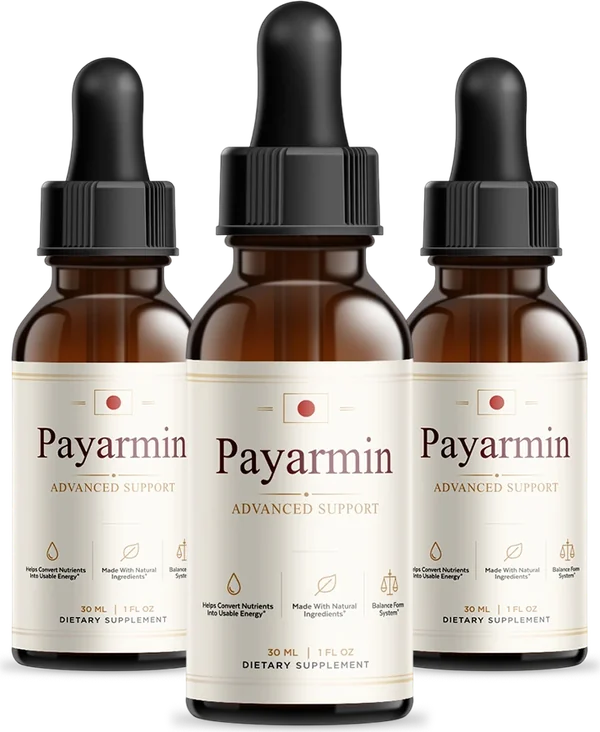
By group02
Which Payarmin ingredients have their own page?
Nine pages cover the 23 lines, grouped by what they are and how much research exists.
- Chromium picolinate, the one line with its own amount.
- Gymnema, African mango and Panax ginseng.
- Green tea and guarana, the caffeine sources.
- Maca and adaptogens and grape seed.
- The eight amino acids and the other blend lines.
Each page repeats the same readings: label place, the most the line can weigh, and the dose that studies used.
Ceilings03
How much of each Payarmin ingredient is in one dropper?
Nobody outside the maker knows, but position fixes a maximum: line k can weigh at most 200 / k mg.
Maca, in first place, could be up to 200 mg. That would leave nothing for the other 21 lines, so the real figure is lower. Grape seed, second, is capped at 100 mg. Gymnema, eighth, at 25 mg. Panax ginseng, twelfth, at 16.7 mg.
The even split of 9.09 mg is a fair middle guess for the blend, though not a measurement. Hidden amounts are legal for blends under 21 CFR 101.36 (21 CFR 101.36 (eCFR)). What the label hides is the weight of each line.
The table gives all 23 lines. Read it left to right: label place, the most per mL, the dose studies used and what the evidence shows.
| Label line | Place | Per 1 mL serving | Amount used in research | Evidence |
|---|---|---|---|---|
| Chromium (as Chromium Picolinate) | Chromium line | 0.7 mcg | Hundreds of mcg in key trials (200-1,000 mcg a day) (NIH ODS, Chromium) | Mixed; small effect in some people with diabetes |
| Maca (Lepidium meyenii) Root Extract | 1 of 22 | at most 200 mg | Studied for other uses, not blood sugar (MSKCC, Maca) | No blood sugar trials |
| Grape (Vitis vinifera) Seed Extract | 2 of 22 | at most 100 mg | Studied for other uses (100-300 mg in many trials) (NCCIH, Grape Seed Extract) | Not established for blood sugar |
| Guarana (Paullinia cupana) Seed Extract | 3 of 22 | at most 66.7 mg | Caffeine source (MSKCC, Guarana) (FDA, Caffeine: how much is too much?) | Not a blood sugar ingredient |
| African Mango (Irvingia gabonensis) Seed Extract | 4 of 22 | at most 50 mg | 150 mg twice a day (300 mg) (MSKCC, Irvingia gabonensis (African mango)) (NIH ODS, Dietary Supplements for Weight Loss) | Weak, small trials |
| Eleutherococcus Senticosus Root Extract | 5 of 22 | at most 40 mg | 800 mg a day in one trial (MSKCC, Siberian Ginseng (Eleuthero)) (NIH ODS, Exercise & Athletic Performance) | No effect in rigorous studies |
| Astragalus Root Extract | 6 of 22 | at most 33.3 mg | No blood sugar dose established (NCCIH, Astragalus) | Not established |
| Green Tea (Camellia sinensis) Leaf Extract | 7 of 22 | at most 28.6 mg | 141-1,207 mg catechins (weight studies) (NCCIH, Green Tea) (NIH ODS, Dietary Supplements for Weight Loss) | Small, inconsistent |
| Gymnema Leaf Extract | 8 of 22 | at most 25 mg | 200-400 mg a day of extract (Drugs.com, Gymnema monograph) | Small trials; small effect |
| Coleus Forskohlii Root Extract | 9 of 22 | at most 22.2 mg | 500 mg a day of 10% forskolin extract (MSKCC, Forskolin (Coleus forskohlii)) (NIH ODS, Dietary Supplements for Weight Loss) | No weight effect in small trials |
| Capsicum Annuum Fruit Extract | 10 of 22 | at most 20 mg | 2-4 mg capsaicin a day (MSKCC, Cayenne (Capsicum)) (NIH ODS, Dietary Supplements for Weight Loss) | No significant weight change |
| Grapefruit (Citrus paradisi) Fruit Extract | 11 of 22 | at most 18.2 mg | No studied dose found (FDA, Grapefruit juice and drugs) | Not established |
| Panax Ginseng Aerial Extract | 12 of 22 | at most 16.7 mg | Root studies: about 100 mg to 20 g a day; aerial parts are less studied (NCCIH, Asian Ginseng) (Shishtar et al., PLoS One 2014) | Modest drop in fasting glucose in root studies; no A1C effect |
| Raspberry Ketones | 13 of 22 | at most 15.4 mg | Only tested in combination products (OPSS (DoD), Raspberry Ketone) (NIH ODS, Dietary Supplements for Weight Loss) | No human evidence alone |
| L-Glutamine | 14 of 22 | at most 14.3 mg | About 15-45 g a day (sports studies) (NIH ODS, Exercise & Athletic Performance) | Not supported for performance |
| L-Tyrosine | 15 of 22 | at most 13.3 mg | No verified dose source | Not established |
| L-Arginine Base | 16 of 22 | at most 12.5 mg | 2-20 g a day (sports studies) (MSKCC, Arginine) (NIH ODS, Exercise & Athletic Performance) | Little or no performance benefit |
| Beta-Alanine | 17 of 22 | at most 11.8 mg | 1.6-6.4 g a day (NIH ODS, Exercise & Athletic Performance) | Mixed (exercise only) |
| Monoammonium Glycyrrhizinate | 18 of 22 | at most 11.1 mg | No studied dose found (NCCIH, Licorice Root) | Not established |
| GABA (Gamma amino butyric acid) | 19 of 22 | at most 10.5 mg | No verified dose source | Not established |
| L-Ornithine HCL | 20 of 22 | at most 10 mg | No verified dose source (NIH ODS, Exercise & Athletic Performance) | Not established |
| L-Tryptophan | 21 of 22 | at most 9.5 mg | No blood sugar dose established (NORD, Eosinophilia-Myalgia Syndrome) (Drugs.com, L-tryptophan) | Not established |
| L-Carnitine Base | 22 of 22 | at most 9.1 mg | 2-3 g a day (type 2 diabetes studies) (NIH ODS, Carnitine) | Some glucose improvement; more trials needed |
Gymnema studies used 200 to 400 mg of extract a day (Drugs.com, Gymnema monograph). The label caps gymnema at 25 mg per mL. Two droppers a day is at most 50 mg, which is a quarter of the low end of the studied range.
The one number04
How much chromium is in Payarmin?
Each mL holds 0.7 mcg of chromium, labeled as chromium picolinate, which is 2% of the 35 mcg Daily Value.
That is the only ingredient with its own printed amount. NIH sets the Adequate Intake at 20 to 35 mcg a day for adults (NIH ODS, Chromium). A 1997 trial of 180 adults with type 2 diabetes used 1,000 mcg a day. A later trial at the same dose found no significant change.
Against a 200 mcg dose, 0.7 mcg is 0.35%. Against 1,000 mcg, it is 0.07%. At two droppers a day, 1.4 mcg is still 0.14% of 1,000 mcg. Chromium may also add to diabetes medicines and may reduce how well levothyroxine is absorbed. See the chromium page for the studies.
Payarmin: from $49 a bottle30 mL · 2, 3 or 6 bottles · free US shipping on 3 and 6 · 60-day results-or-refund guarantee
See packsFlags05
Which Payarmin ingredients need extra care?
Five groups deserve a second look: caffeine sources, glucose-active herbs, licorice, grapefruit and xylitol.
- Guarana (#3) and green tea (#7) add caffeine, and no amount is printed (MSKCC, Guarana) (FDA, Caffeine: how much is too much?). Green tea extracts have caused rare liver injury (NCCIH, Green Tea).
- Gymnema, ginseng and chromium may add to diabetes medicines (Drugs.com, Gymnema monograph) (Shishtar et al., PLoS One 2014).
- The licorice compound can raise blood pressure with heavy or long use (NCCIH, Licorice Root).
- Grapefruit can interact with some prescription drugs (FDA, Grapefruit juice and drugs).
- Other ingredients include xylitol, which is dangerous to dogs (FDA, Paws Off Xylitol).
Show this list to your doctor or pharmacist before you start. Never change a prescribed dose because of a supplement.
The full set of cautions is on the side effects page.
The rest06
What are the other ingredients in Payarmin?
The other ingredients are glycerin, water, organic lemon extract, stevia extract 97% (Reb A), xylitol, sodium benzoate, potassium sorbate, citric acid and natural flavors.
Glycerin and water carry the liquid. Stevia and xylitol sweeten it, which is why the drops taste sweet. Sodium benzoate and potassium sorbate are preservatives. The sales page says “100% natural”, and the label also lists those preservatives and natural flavors, so read that phrase as marketing.
| Role | Label lines |
|---|---|
| Liquid base | Glycerin, water |
| Sweeteners | Stevia extract 97% (Reb A) (FDA, Aspartame and Other Sweeteners), xylitol |
| Preservatives | Sodium benzoate, potassium sorbate, citric acid |
| Flavor | Organic lemon extract, natural flavors |
Photos of the plants appear on the supplement facts page beside the label. They show the plants, not the amounts.
Order PayarminFAQ07
Payarmin ingredients: common questions
How many ingredients are in Payarmin?
Payarmin has 23 label lines: chromium picolinate plus 22 blend ingredients. The sales page names only six. The label also lists nine other ingredients, such as glycerin, xylitol and citric acid, which are carriers, sweeteners and preservatives.
What is the first ingredient in Payarmin?
Maca root extract is first in the blend, so it weighs the most. The label caps it at 200 mg per mL by position, but a real figure is not printed. Chromium is listed above the blend, with its own 0.7 mcg.
Does Payarmin contain caffeine?
Yes, through guarana seed extract and green tea leaf extract. The label prints no caffeine amount. FDA cites 400 mg a day as a level most healthy adults tolerate, so sensitive people should start with one dropper in the morning.
Is the Payarmin blend proprietary?
Yes. The label shows a 200 mg proprietary blend and lists its 22 ingredients by weight, without single amounts. Federal rules allow this. Divide 200 by 22 for an even split of 9.09 mg per line.
Does Payarmin contain sugar or xylitol?
It contains xylitol and stevia as sweeteners. No sugar line is printed and the label shows no calories line. Xylitol is dangerous to dogs, so keep the bottle out of a pet's reach.
Are Payarmin ingredients natural?
The sales page says “100% natural”, but the label lists sodium benzoate, potassium sorbate, citric acid and natural flavors. Many ingredients are plant extracts. Treat natural as a marketing word with no set standard.
Is there gymnema in Payarmin?
Yes. Gymnema leaf extract is eighth of 22, so it can weigh at most 25 mg per mL. Studies used 200 to 400 mg of extract a day, and gymnema can dull sweet taste.
Does Payarmin list its ingredient amounts?
Only two: chromium at 0.7 mcg and the 200 mg blend as a whole. Single blend amounts are hidden. The dose table gives the most each line can weigh by its place in the list.
Who wrote this08
Written and reviewed by
Pages built from the label, the sales page and linked NIH, FDA, CDC, FTC and peer-reviewed sources.
Last updated . Read our editorial standards, and the way we check reviews. This website is a U.S. retail partner for Payarmin, not the manufacturer or the label's distributor. Buying through our order links earns us money.
Keep reading
More about Payarmin
U.S. retail partner for Payarmin
Ready to try Payarmin?
Start by checking your medicines, then pick a pack. Six bottles cost the least per bottle, and three or six ship free in the US. The 60-day guarantee counts from the day you buy.
- Secure checkout
- 60-day money-back guarantee
- Ships from the U.S.